
Last updated November 4, 2026
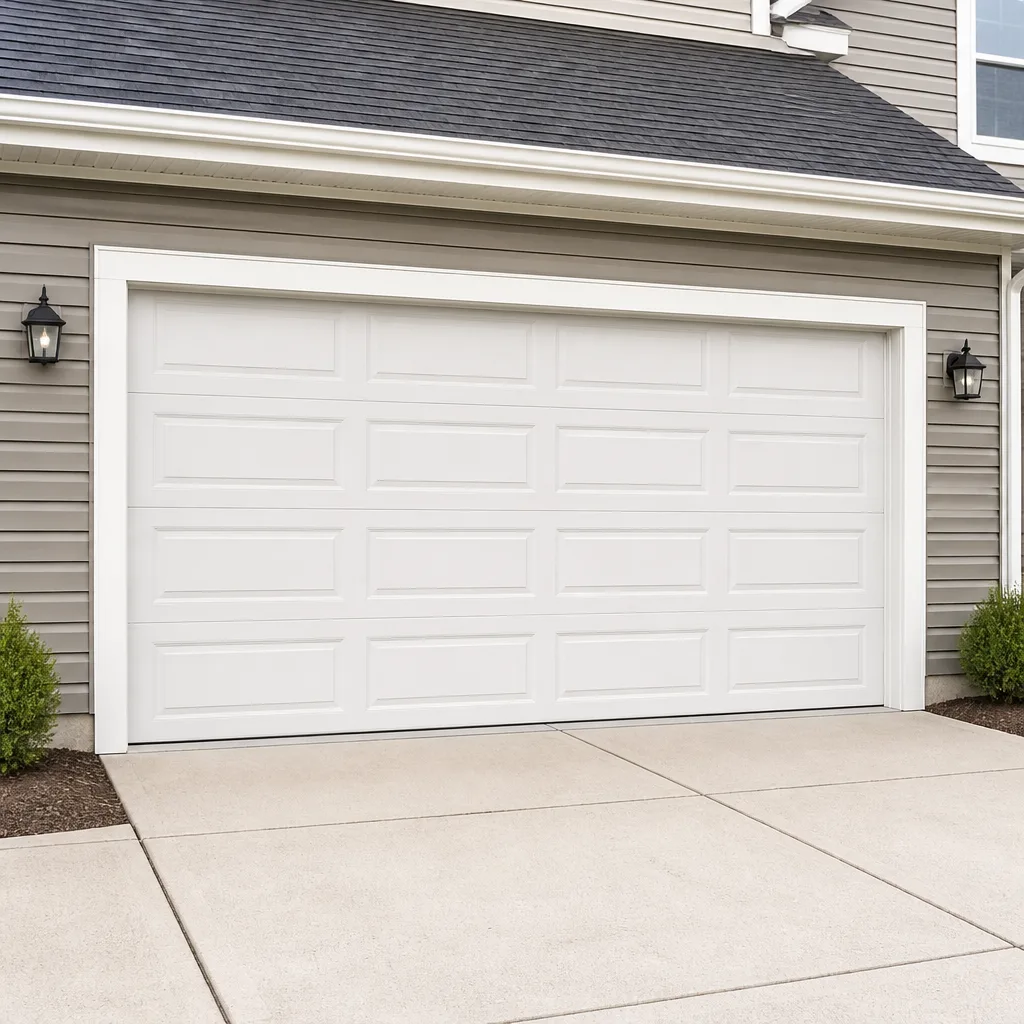 Raised-panel steel
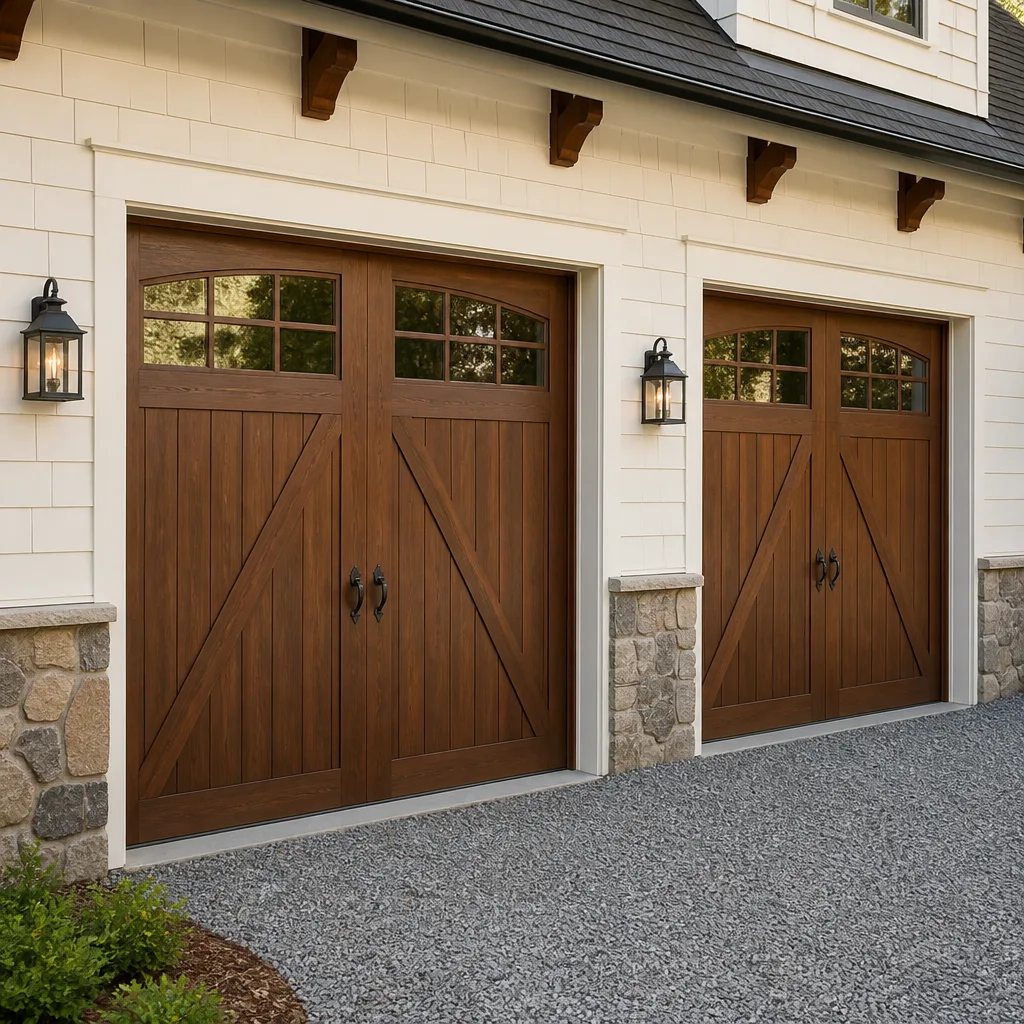 Carriage house
 Modern flush
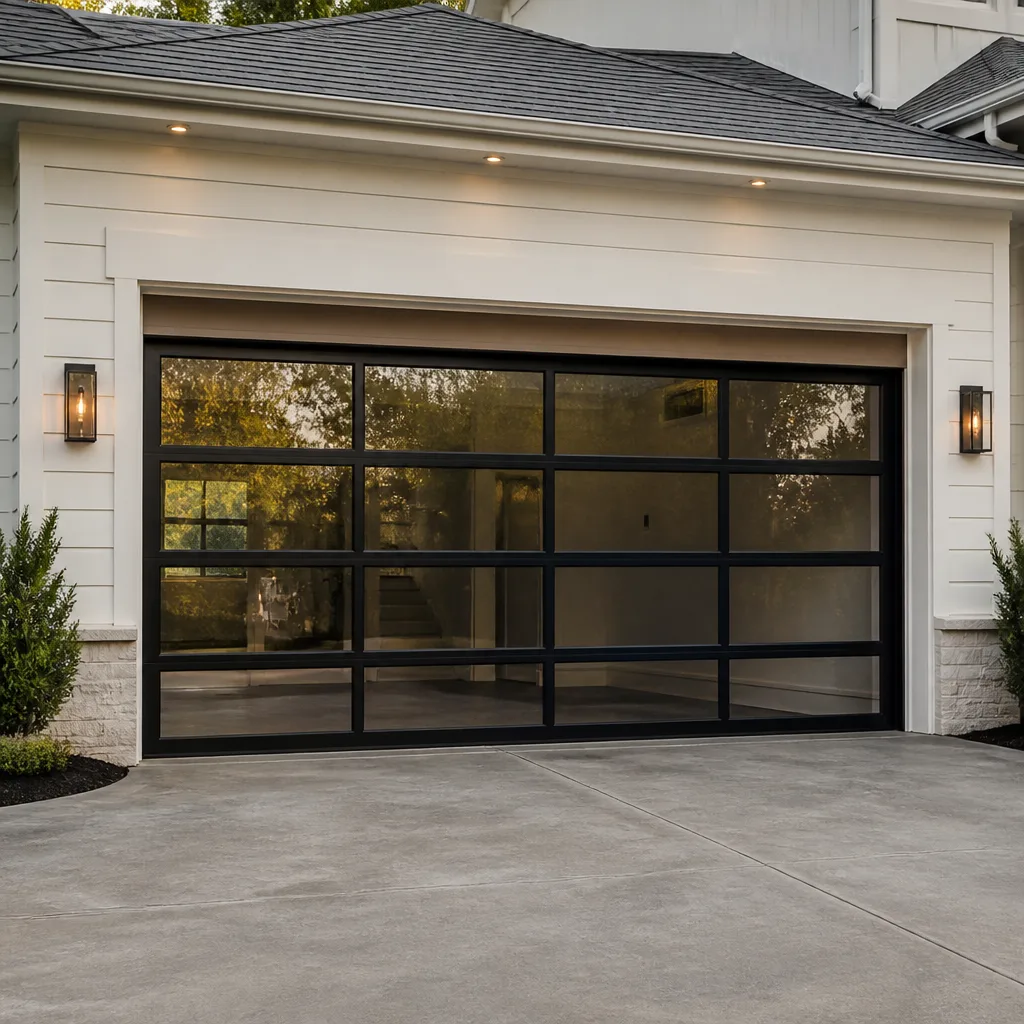 Full-view glass
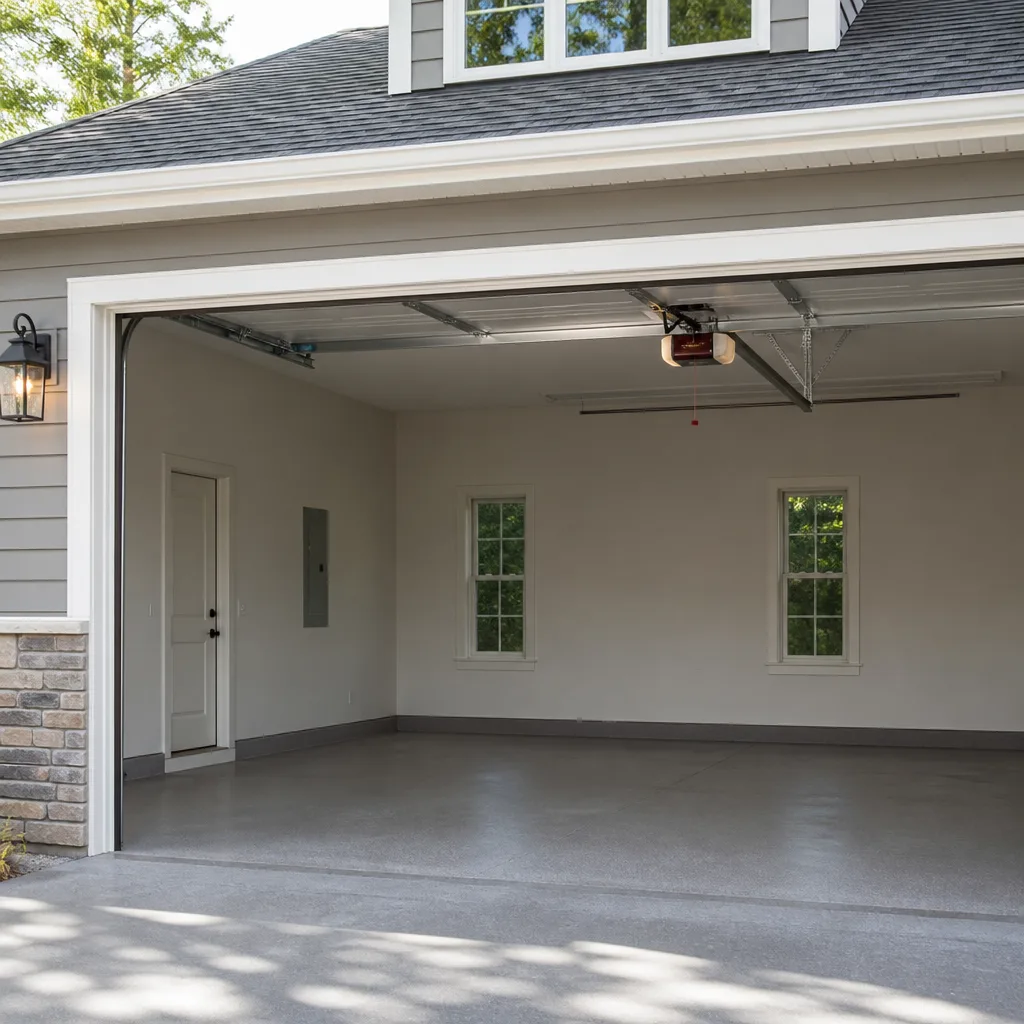 LiftMaster openers
 Chamberlain openers
Full 25-point door and opener safety check with every visit - springs, cables, rollers, tracks, and your LiftMaster or Chamberlain opener included
You get a price before we start. It does not change when the truck arrives.
Get your free estimateHow to Hire a Garage Door Contractor in Bellflower: A Step-by-Step Guide
Most Bellflower homeowners assume every garage door contractor they call is playing by the same rules. That assumption is expensive. California runs a two-track licensing system for this trade, and the low bid usually comes from the track with the least accountability. What looks like a bargain on the quote line becomes a headache the moment something goes wrong and there’s no bond, no workers’ compensation coverage, and no state board to press for a remedy. This guide walks you through exactly how to separate a contractor who can stand behind the work from one who can’t, before you sign anything.
Quick Answer
To hire a garage door contractor in Bellflower, verify their California State License Board (CSLB) license and classification first, then ask four brand-specific questions, require a written estimate with two specific line items, and check reviews for technical language rather than just politeness. The whole verification takes under ten minutes and eliminates most of the risk before a technician ever arrives. For a free estimate from a licensed multi-brand specialist, call (833) 598-2561.
Styles & brands we work with
- Raised-panel steel
- Carriage house
- Modern flush
- Full-view glass
- LiftMaster openers
- Chamberlain openers
Table of Contents
- Step 1: Verify the CSLB License in Under Two Minutes
- What License Classifications Actually Mean for Garage Door Work
- Step 2: Four Questions That Separate Multi-Brand Technicians from One-Brand Installers
- Step 3: What a Legitimate Written Estimate Must Include in California
- Red Flags Specific to Garage Door Contractors
- Step 4: How to Read Reviews for Technical Competence, Not Just Friendliness
- Insurance and Bonding: What Actually Protects You
- Step 5: Putting the Warranty in Writing Before Work Starts
Step 1: Verify the CSLB License in Under Two Minutes
The single most important step in hiring a garage door contractor in Bellflower is checking the license before you check anything else. The California State License Board maintains a public database at cslb.ca.gov, and a search takes about ninety seconds. You need the contractor’s license number, which any legitimate company prints on their vehicle, their website, and their business card. If a contractor hesitates to give you a number before quoting, that’s the end of the conversation.
Here’s the quick process:
- Go to cslb.ca.gov and click “Check a License.” Enter the number. If the contractor gave you a name but no number, search by business name.
- Confirm the status says “Active.” A suspended, expired, or revoked license means the contractor cannot legally work on your door.
- Check the classifications listed on the license. This is where most Bellflower homeowners stop reading, and it’s where the gray area hides. A license is not a license for everything. The classification tells you what kind of work the state has actually qualified this contractor to perform.
- Look at the bond and workers’ compensation fields. If workers’ comp shows “exempt” and the contractor sends a crew of two, ask who is covering an injury on your property.
- Check the business name matches. Scammers sometimes rent a license number from an inactive company. The name on the license should match the name on the quote.
The whole check takes less time than brewing coffee, and it’s the difference between a contractor the state can compel and one who can vanish with your deposit. Bellflower sits in Los Angeles County, which means there’s a dense market of legitimate shops and, unfortunately, a long tail of unlicensed operators working out of pickups. The CSLB check filters out the second group instantly.
What License Classifications Actually Mean for Garage Door Work
Here’s the licensing gray area most Bellflower homeowners never hear about. In California, a contractor can legally perform garage door work under two very different licenses. A General B license allows a contractor to take on broad building projects, with garage doors as one component among many. A C-61/D28 specialty license is specific to door and gate work: it means the contractor passed a trade exam focused specifically on the hardware, the spring systems, the track alignment, and the opener drive units you’re paying them to fix.
The practical difference matters in two ways. First, the D28 contractor has demonstrated trade-specific knowledge to the state, while a general B contractor may be competent but may also be a generalist who subs out door work. Second, the liability profile differs. A general contractor running a larger crew may carry insurance calibrated for whole-home remodels, not for the spring and cable systems on a 400-pound moving door. Neither license is invalid for the work. But you should know which one you’re hiring, because the low bidder won’t volunteer that the B-licensed outfit is treating your garage door as a side project between kitchen remodels.
At Colonial Garage Door Repair, we work as dedicated garage door specialists, not a general handyman service. The distinction matters because spring systems, cable drums, and opener logic boards fail in ways that a general contractor’s estimator often hasn’t been trained to diagnose. When you hire for garage door work in Bellflower, hire someone whose license and daily work are about garage doors.
For full-system work, from garage door repair to complete door replacement, the D28 classification is the strongest signal you’ll find. Ask to see it in writing, on the quote, before the technician arrives.
Step 2: Four Questions That Separate Multi-Brand Technicians from One-Brand Installers
After the license check, the next filter is brand knowledge. Bellflower’s housing stock is remarkably varied, from 1950s and 1960s single-family homes near the 91 Freeway to newer construction, and the doors on those homes carry every manufacturer ever sold in Southern California. A technician who only stocks parts for one brand will show up, look at your Wayne Dalton torque tube, and tell you the door needs replacement because they don’t carry the part. A multi-brand technician fixes it the same day.
Before you invite anyone to quote, ask these four questions. The answers separate experienced, multi-brand technicians from one-brand installers in about three minutes:
- “What brands do you actually stock parts for on the truck, right now?” Listen for specific manufacturer names: LiftMaster, Chamberlain, Genie, Clopay, Amarr, Craftsman, Raynor, Wayne Dalton. Vague answers like “all of them” or “whatever you need” often mean a trip to the supply house and a second service call.
- “Can you service the opener and the door in the same visit?” Many companies treat the door panel and the opener as two separate service calls. A full-system shop diagnoses both in one trip, which is the difference between one afternoon and two half-days off work.
- “Do you carry the model-specific opener drive parts, or just universal replacements?” Universal parts work sometimes, but a LiftMaster chain drive misbehaving under load is better served by the LiftMaster-specific logic board and gear assembly. If the contractor can’t speak to the difference, they may be a parts-swapper rather than a diagnostician.
- “What’s your spring replacement warranty, in writing, and what happens if it fails?” The technician should give you a specific warranty term and a specific remedy. A vague “we stand behind our work” without a number is not a warranty. Get the term, the coverage, and the process in the written estimate.
We’re trained and equipped to work on eight major garage door and opener brands: LiftMaster, Chamberlain, Genie, Clopay, Amarr, Wayne Dalton, Craftsman, and Raynor. That’s not a marketing line. It means the truck arrives stocked for real diagnosis, not guesswork. When a Bellflower homeowner calls with a Craftsman opener that opens but won’t close, the fix should be one visit, not a discovery process.
And because garage door opener repair is a core part of what we do, not an afterthought tagged onto door work, the openers get the same brand-specific attention as the doors themselves. The opener is the most failure-prone component in the whole system, and it’s the part most generalists treat as secondary.
Step 3: What a Legitimate Written Estimate Must Include in California
A legitimate written estimate in California protects you under the state’s Home Improvement Contract rules. It should be printed, dated, signed, and itemized. A verbal quote means nothing when the invoice arrives. But beyond the legal minimums, there are two line items that, if missing, predict future surprise charges more reliably than any Yelp review.
The first mandatory line item is a specific labor cost. Not “labor and materials” lumped together. If the contractor won’t separate labor from parts, they’re creating room to adjust both numbers later. The second is a parts list with manufacturer names and part numbers. “Spring, pair” is not a parts list. “Amarr 42-inch torsion spring, pair, part #XXXX” is. When the part number is in writing, the price is in writing, and the warranty attaches to something real. Without part numbers, the contractor can substitute cheaper hardware and charge you for the name-brand line.
A complete estimate for garage door work in Bellflower should include:
- The contractor’s CSLB license number printed on the document
- Separate line items for parts and labor
- Manufacturer names and part numbers for every component being replaced
- The warranty term for parts and labor, in writing
- The total price, stated as the price you’ll pay unless you approve a change order in writing
- The project timeline, from measure to completion
The timeline matters because most cities in Los Angeles County require a permit for structural door changes, and a legitimate contractor knows whether your Bellflower project needs one. Ask the city’s building department directly if you’re unsure; a contractor who wants to skip a required permit is not doing you a favor. The fee, if any, should appear in the estimate, not materialize after the door is hung.
For our part, the estimate is free, and the price you’re quoted is the price you see before any work begins. The written estimate sets the final price, and it doesn’t change unless you sign a written change order. That’s how Bellflower homeowners should expect every contractor to operate, and it’s the standard we hold ourselves to on every job.
Red Flags Specific to Garage Door Contractors
Most “contractor red flag” lists online are generic: no license, no insurance, cash-only. Those apply everywhere. But garage door work has its own specific tells, and they’re the ones that cost Bellflower homeowners money. Here are the patterns we see again and again when we’re called in to fix another contractor’s work:
- Vague spring warranties. A torsion spring cycles. A ten-year warranty that doesn’t specify cycle rating is meaningless, because the spring that fails at 5,000 cycles is not the spring that lasted a decade. Ask for the cycle rating and the warranty term together.
- Refusal to provide manufacturer part numbers. We covered this above, but it’s worth repeating: no part number, no leverage. A contractor who won’t put part numbers in writing doesn’t want you checking the price of the part online.
- Pressure to replace when repair is clearly possible. A bent track is repairable. A worn roller is replaceable. A broken cable doesn’t condemn the door. If the technician’s first breath is “you’re better off buying a whole new door,” get a second opinion before you spend four figures.
- No mention of safety inspections as part of the job. A proper repair includes checking the cables, drums, bearings, and balance after the primary fix. If the technician fixes one spring and doesn’t touch anything else, they’re not doing the job.
- Unmarked trucks and personal cell phone numbers. An unlicensed operator runs exactly this way. The CSLB check from Step 1 filters them out before they ever get to this stage.
- Deposits before measuring. For a standard door repair or replacement, no legitimate contractor asks for a deposit before measuring your opening and quoting the job. Deposit-first is a cash-flow signal, not a service signal.
The common thread is accountability. A contractor who puts part numbers, warranty terms, and specific labor in writing is a contractor who stands behind the work. A contractor who resists written specifics at every turn is planning to charge you for the ambiguity.
Step 4: How to Read Reviews for Technical Competence, Not Just Friendliness
Online reviews for garage door companies are weaker than reviews for, say, restaurants, because most homeowners don’t know enough about door hardware to evaluate the technical quality of the fix. “Technician was polite and door works” could describe a rigorous repair or a lucky parts swap that’ll fail in November. You need to read for different signals.
Here’s what to look for in a review, and what to skip:
- Look for language that names components. A review that says “replaced both torsion springs and realigned the track” tells you the customer saw specific work done. A review that says “he fixed it” tells you nothing about what was done or why.
- Look for brand mentions. “Diagnosed the failing Chamberlain logic board in twenty minutes” is a review from someone with a competent technician. “He was nice” is a review from someone who can’t tell a good repair from a bad one yet.
- Look for repeat customers. “Third time we’ve used them” means the door held up and they came back. A garage door company that does garbage work doesn’t get third calls.
- Ignore review volume as the main metric. A newer company with thirty detailed, technical reviews is a stronger signal than an old one with two hundred vague “nice guy” reviews.
- Read the one-star reviews seriously. Not to see if someone was unhappy, but to see how the company responded. A professional response that addresses the issue without making excuses is a signal of how they’ll treat you if something goes wrong.
Bellflower’s proximity to larger LA-area service markets means you’ll see reviews from across the county. Filter for reviews that mention your kind of problem, on your kind of door, and note whether the company’s response shows technical knowledge or just customer-service training.
Insurance and Bonding: What Actually Protects You
Licensing is a state requirement. Insurance and bonding are what stand between you and financial loss when something goes wrong. They’re not the same thing, and a contractor who uses them interchangeably is either confused or counting on you being confused.
A contractor’s bond, required by the CSLB, is a guarantee that the contractor will follow state contracting law. If the contractor violates the law, you can file a claim against the bond. The bond amount is set by the state, and it has a cap. It’s not a blank check for bad work. A contractor’s workers’ compensation insurance covers injuries to workers on your property. If the contractor has no workers’ comp and a technician is hurt in your garage, the claim can land on your homeowner’s policy. That’s the part most homeowners discover too late.
Liability insurance covers damage the contractor causes to your property. Ask to see the certificate of insurance, and confirm the policy is current. A legitimate contractor sends it over without hesitation. The unlicensed operator doesn’t have one to send.
When you hire a garage door contractor in Bellflower, you’re hiring someone to work on a 400-pound moving door over your car, your tools, and sometimes your kids’ bikes. The insurance and bond aren’t paperwork formalities. They’re the difference between a claim the contractor’s insurer pays and a claim your homeowner’s policy absorbs. Confirm both before work starts.
Step 5: Putting the Warranty in Writing Before Work Starts
The warranty conversation happens before the work, not after. Once the door is hung and the check is cashed, your leverage shrinks. Here’s the step-by-step for getting a real warranty, not a verbal handshake:
- Ask for the warranty in the written estimate, not the invoice. The estimate is the offer. The invoice is the record of what happened. A warranty that appears for the first time on the invoice was not part of your decision.
- Get the term in numbers. “Lifetime warranty” means nothing without a definition. Lifetime of what? The spring? The door? The original purchaser at this address? Specific numbers, written down.
- Ask what the warranty covers for parts and for labor. A parts warranty that excludes labor means a free spring that costs $340 to install. That’s not a warranty, that’s a coupon.
- Ask what voids the warranty. Some manufacturers void door warranties if the door isn’t serviced by a licensed contractor. Others void if non-OEM parts are used. Know the exclusions before you rely on the coverage.
- Get it signed. A printed warranty on the estimate, signed by the contractor, is a document. A promise made over the phone is a memory.
For spring replacements specifically, the warranty term should be tied to the cycle rating. A spring rated for 10,000 cycles with a five-year warranty tells you exactly what you’re buying. A spring with no cycle rating and a “lifetime warranty” tells you the contractor is counting on you moving before it breaks.
Throughout Bellflower’s mix of older and newer construction, the doors that last are the ones maintained by contractors who put the terms in writing. The doors that fail early are often the ones where the warranty was a handshake and the part numbers were missing. The paper doesn’t make the door work better, but it makes the contractor’s promises enforceable. And that’s the whole point of hiring carefully.
Common Mistakes to Avoid
- Skipping the CSLB check because the quote was low. The unlicensed operator undercuts the licensed one specifically because they’re not paying for a bond, insurance, or workers’ comp. You’re not saving money. You’re buying the absence of protections.
- Hiring a general contractor for door work without asking who’s doing the job. If the answer is “our guy handles doors,” you’re hiring an unvetted subcontractor through a licensed middleman. Ask for the sub’s license number too.
- Accepting “we warranty our work” without a number. A warranty with no term, no cycle rating, and no labor coverage is marketing. Get it in writing or treat it as nonexistent.
- Paying a deposit before anyone measures the door. For standard repair and replacement, measurement happens before quote, and quote happens before deposit. A contractor who wants money before looking at the door is selling you on hope.
- Replacing a door when a repair would restore full function. Some technicians earn commission on replacements, not repairs. A second opinion costs you a little time and often saves you a few thousand dollars in Bellflower’s competitive market.
- Reading only the five-star reviews. Polite technicians who fix nothing get five stars. Read the one-star reviews to see how the contractor behaves when something goes wrong, because that’s the behavior you’ll get if it happens to you.
- Letting the spring tension become a DIY project. Torsion springs under tension can cause serious injury. The garage door is not a casual weekend project. Hire a trained professional for anything involving springs or cables.
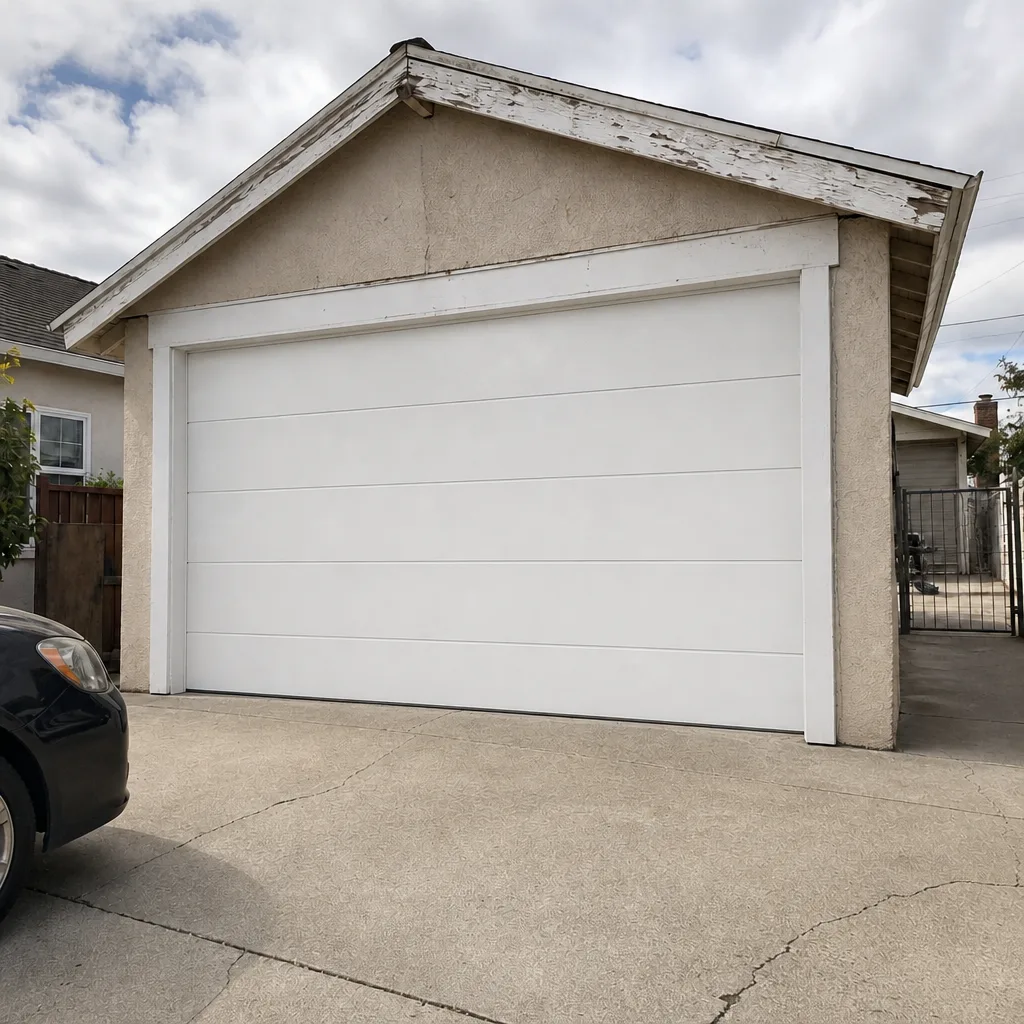
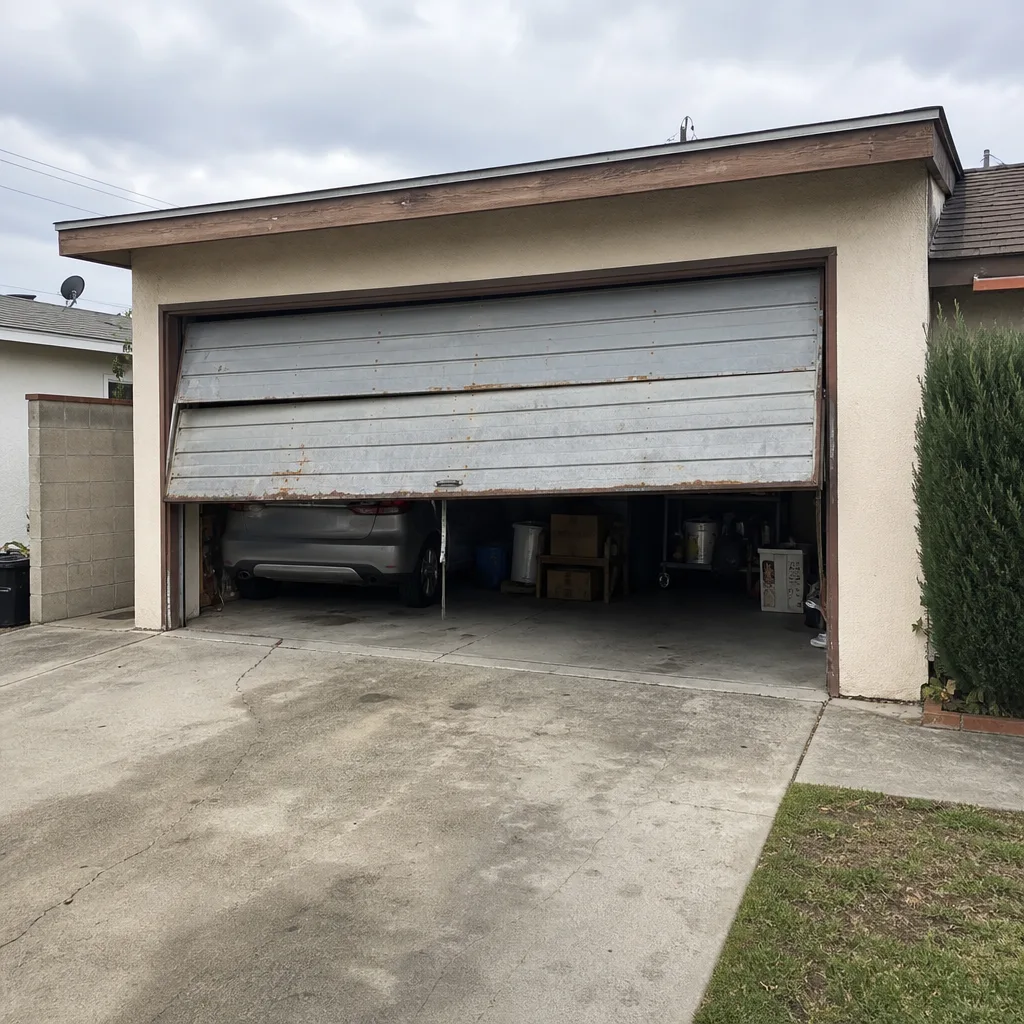
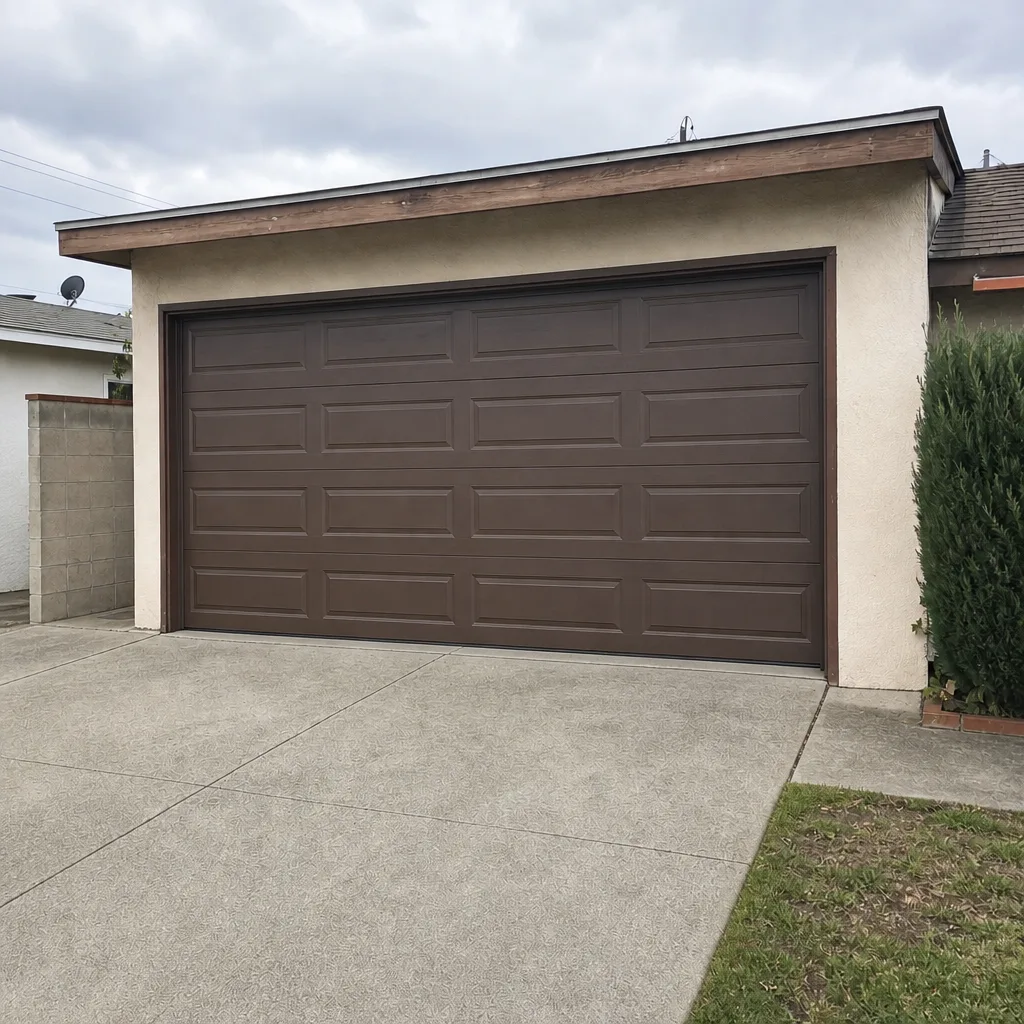
See the difference
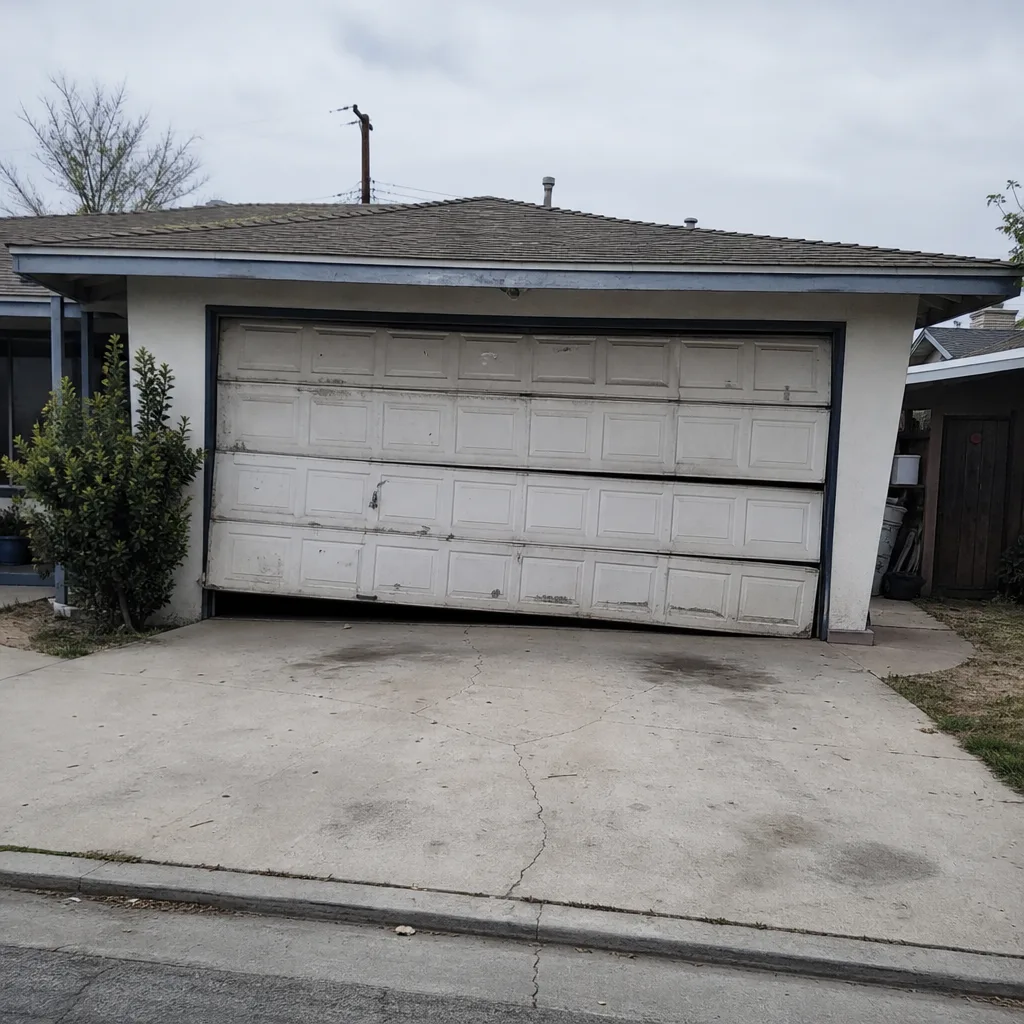 Before
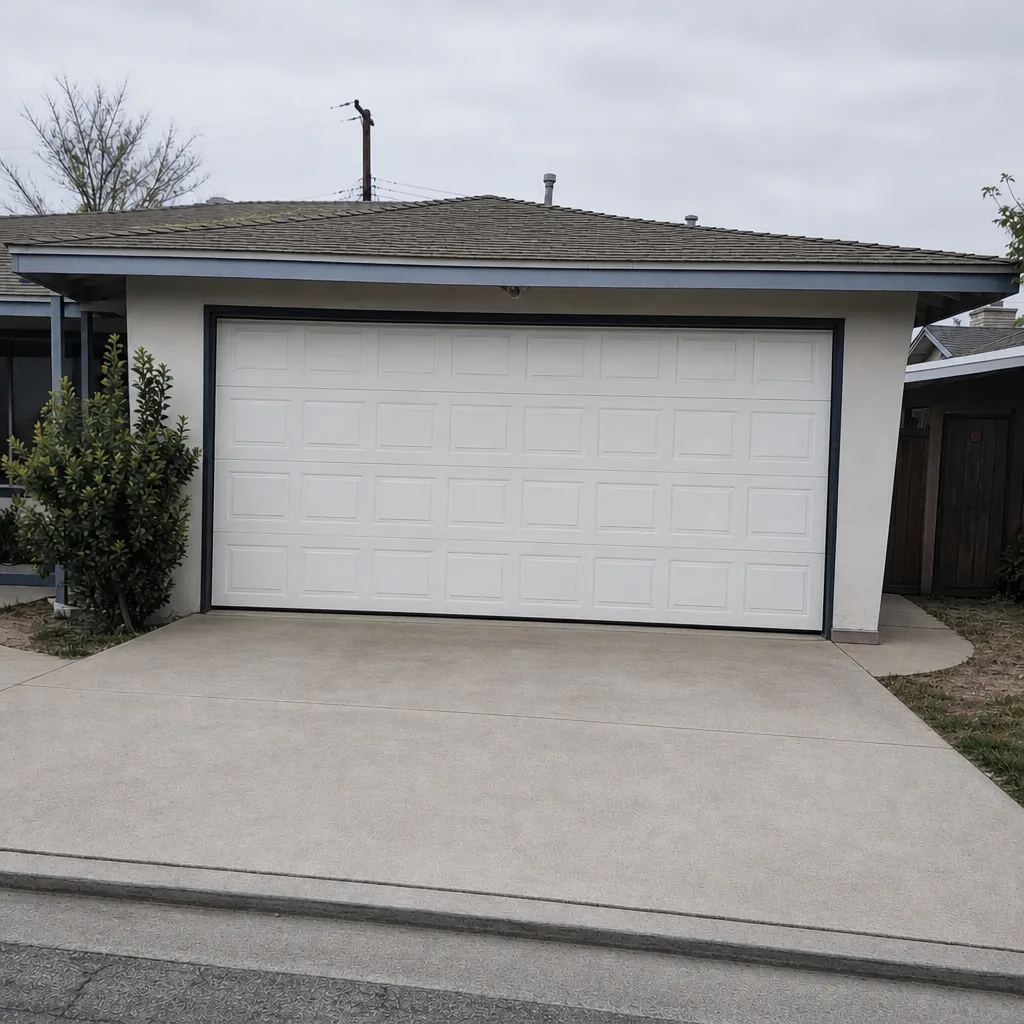 After
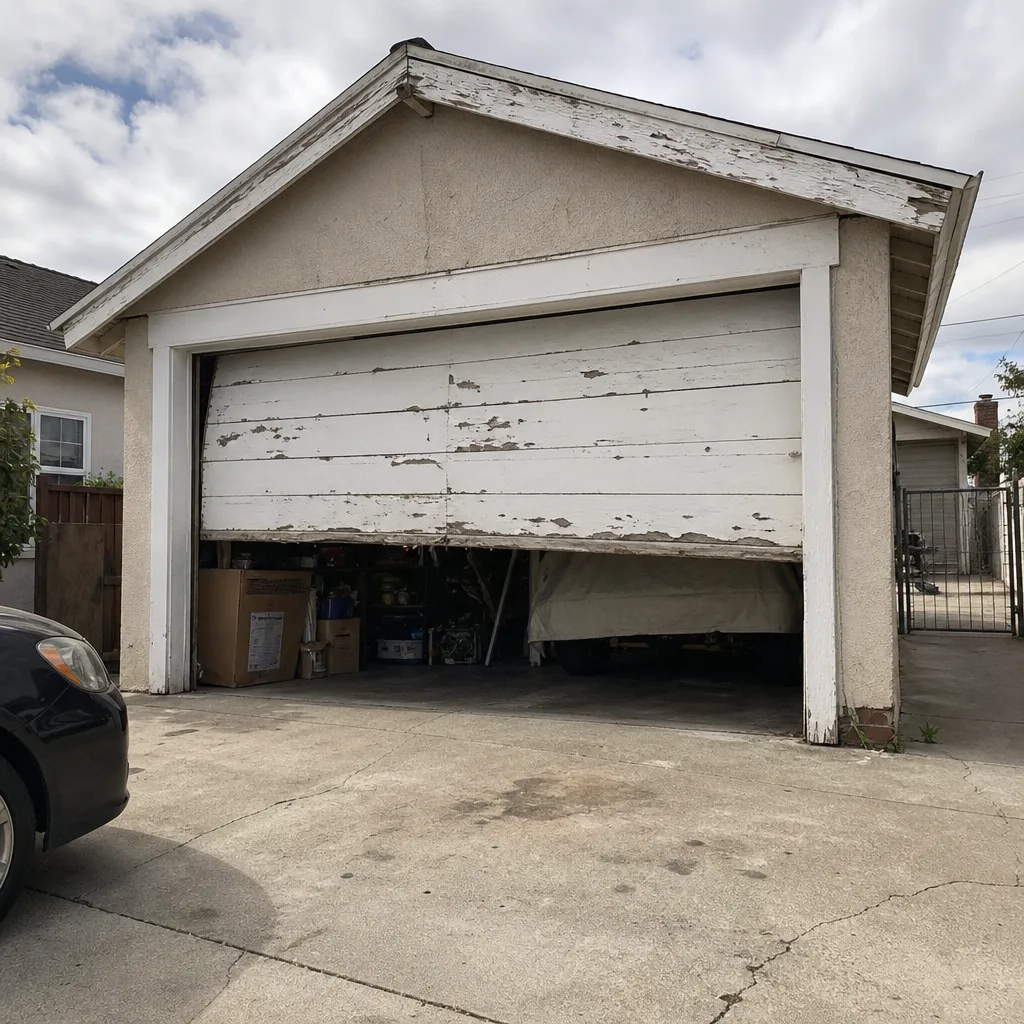 Before
 After
 Before
 After
When to Call a Professional
Some garage door problems are obvious: the door won’t open, the spring is broken, the opener is grinding. But the subtle signs matter too. If your door shudders on the way up, if it’s louder than it used to be, if it doesn’t sit level in the opening, or if the opener reverses without an obstruction, you’re looking at early-stage wear that a trained eye can catch before it becomes a full failure. Bellflower’s mild climate means doors don’t face the extreme cold that corrodes hardware elsewhere, but daily use adds up. A door that cycles four times a day passes through nearly 1,500 cycles a year. That’s wear on springs, cables, rollers, and opener gears. If your door is showing age, don’t wait for the loud bang. Colonial Garage Door Repair offers free estimates in Bellflower. Call (833) 598-2561. We answer 24/7. Fast dispatch from 7am to 7pm, Sunday through Friday.
Frequently Asked Questions
Go to cslb.ca.gov, click “Check a License,” and enter the contractor’s license number. Confirm the status is Active, check the classifications (look specifically for C-61/D28 for door work), and note the bond and workers’ compensation fields. The whole check takes under two minutes, and any legitimate contractor in Bellflower will give you the number without hesitation.
A General B license allows broad building work, with garage doors as one component. A C-61/D28 is a specialty license specific to doors and gates, meaning the contractor passed a trade exam focused on door hardware, springs, tracks, and opener drive systems. Both can legally do the work, but the D28 signals trade-specific training. Ask the contractor which one they hold and factor it into your decision.
A legitimate estimate in California includes the contractor’s CSLB license number, separate line items for parts and labor, manufacturer names and part numbers for every component, the warranty term in writing, the total price, and the project timeline. If parts and labor are lumped together, or part numbers are missing, you’re looking at future surprise charges.
It depends on the scope. Replacing a spring or an opener typically doesn’t require a permit, but structural changes like enlarging an opening or replacing a load-bearing header often do. Ask Bellflower’s building department directly, and make sure the contractor’s estimate states who handles permitting if it’s required. A contractor who wants to skip a required permit is transferring the risk to you.
No, and this is a critical question to ask. Some companies stock parts for only one or two manufacturers and recommend replacement when they encounter a brand they don’t carry parts for. A multi-brand contractor arrives with parts and knowledge for LiftMaster, Chamberlain, Genie, Clopay, Amarr, Wayne Dalton, Craftsman, and Raynor systems. Ask which brands the technician actually stocks parts for before you book.
The cost depends entirely on the specific work, the parts required, and the door’s condition. A broken spring replacement, an opener logic board swap, and a full panel replacement are three very different jobs with three very different prices. The only reliable number is a written estimate based on your actual door. Call (833) 598-2561 for a free estimate. We answer 24/7. Fast dispatch from 7am to 7pm, Sunday through Friday. The price is quoted and agreed before any work starts.
The Bottom Line
Hiring a garage door contractor in Bellflower is a process, not a phone call. Verify the CSLB license and classification. Ask the four brand questions that reveal whether you’re getting a diagnostician or a parts-swapper. Require a written estimate with separate labor and parts line items, manufacturer part numbers, and a warranty term in numbers. Read reviews for technical language, not just friendliness. And confirm insurance and bonding before anyone touches your door. The contractors who pass all five steps are the ones who’ll still be answering the phone when the warranty matters. Call (833) 598-2561 for a free estimate, and get the process started with a team that’s certified to work on eight major brands, from door panel to opener drive to complete new installation.
Written by the team at Colonial Garage Door Repair, serving Bellflower since 2013.