
Last updated November 4, 2026
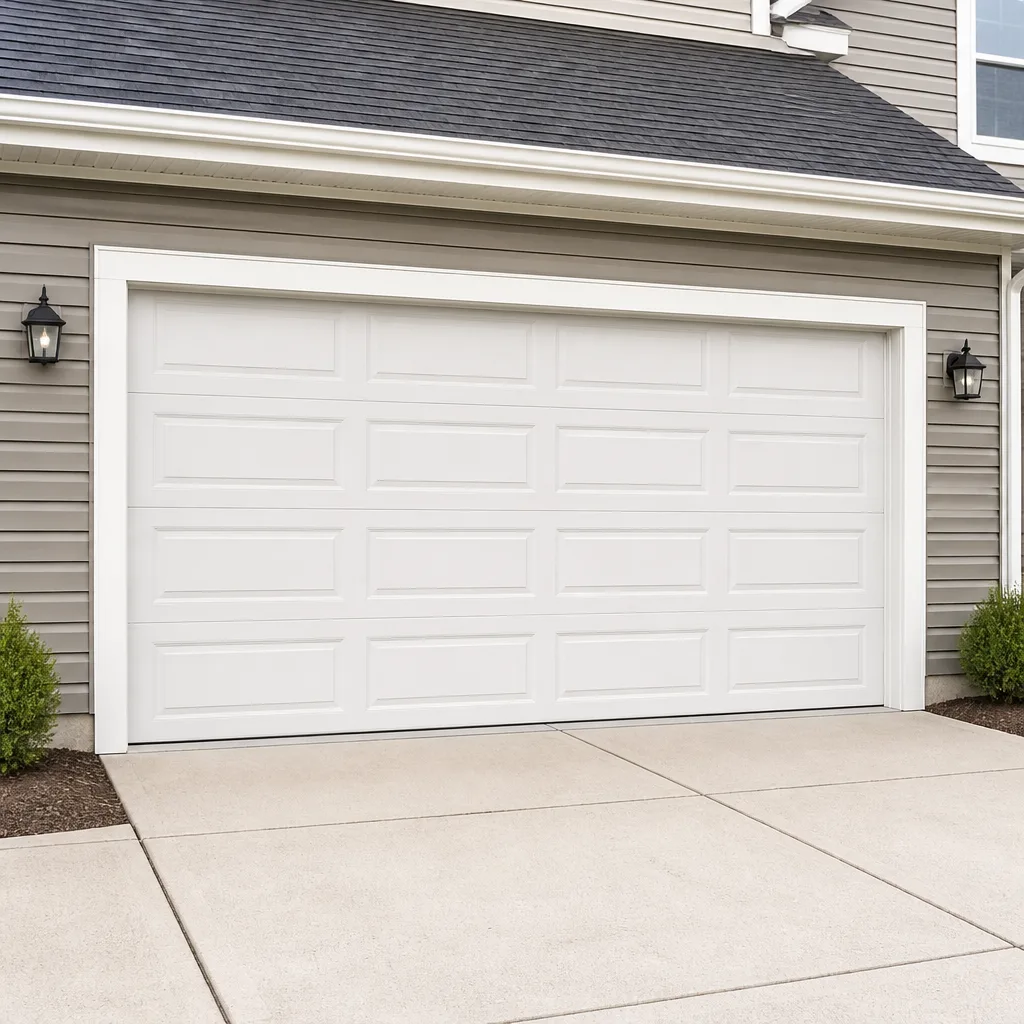 Raised-panel steel
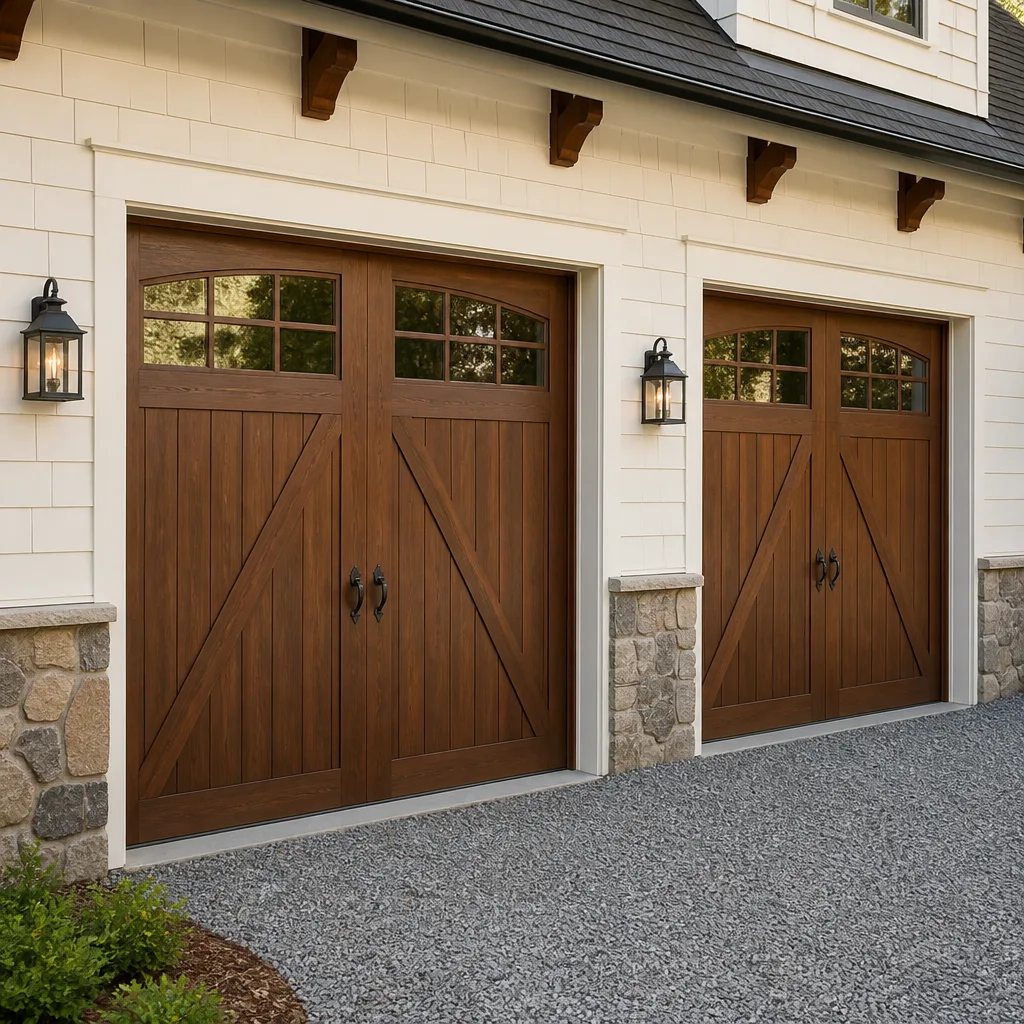 Carriage house
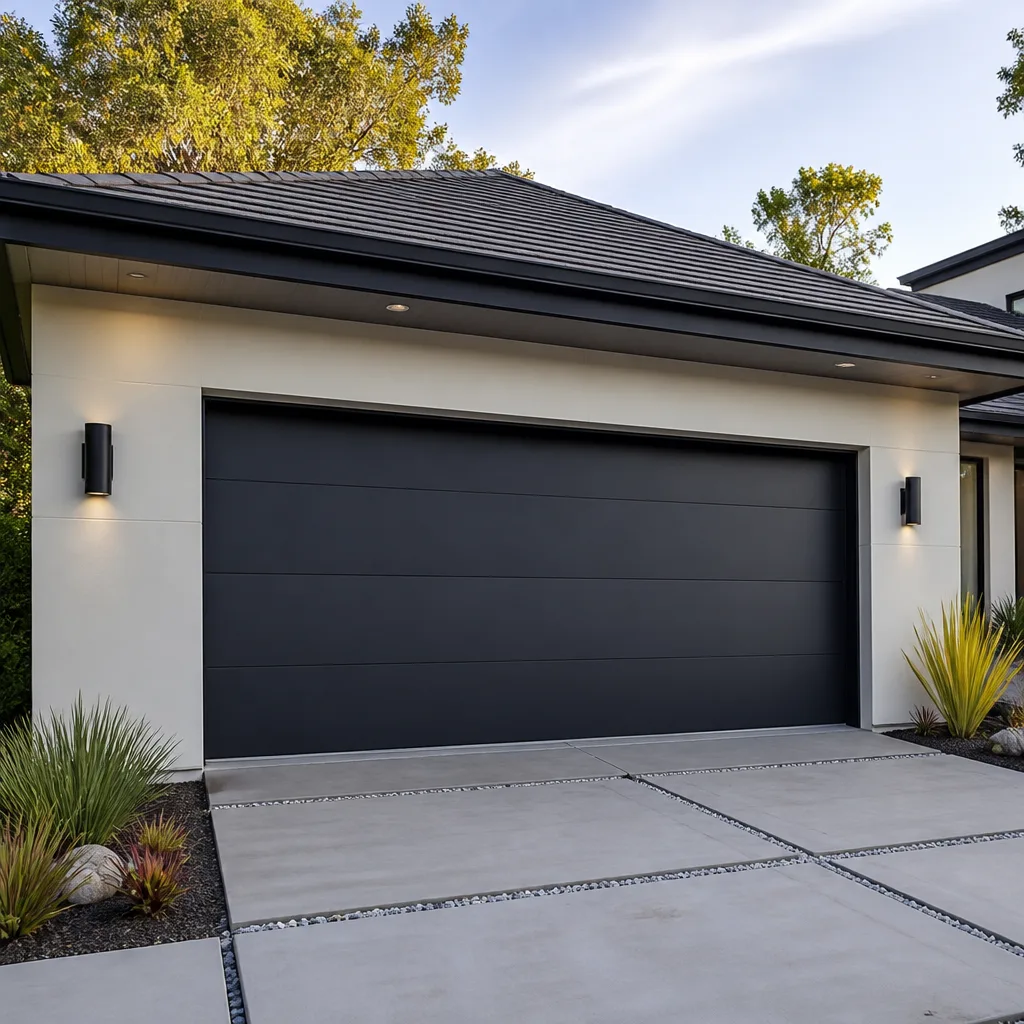 Modern flush
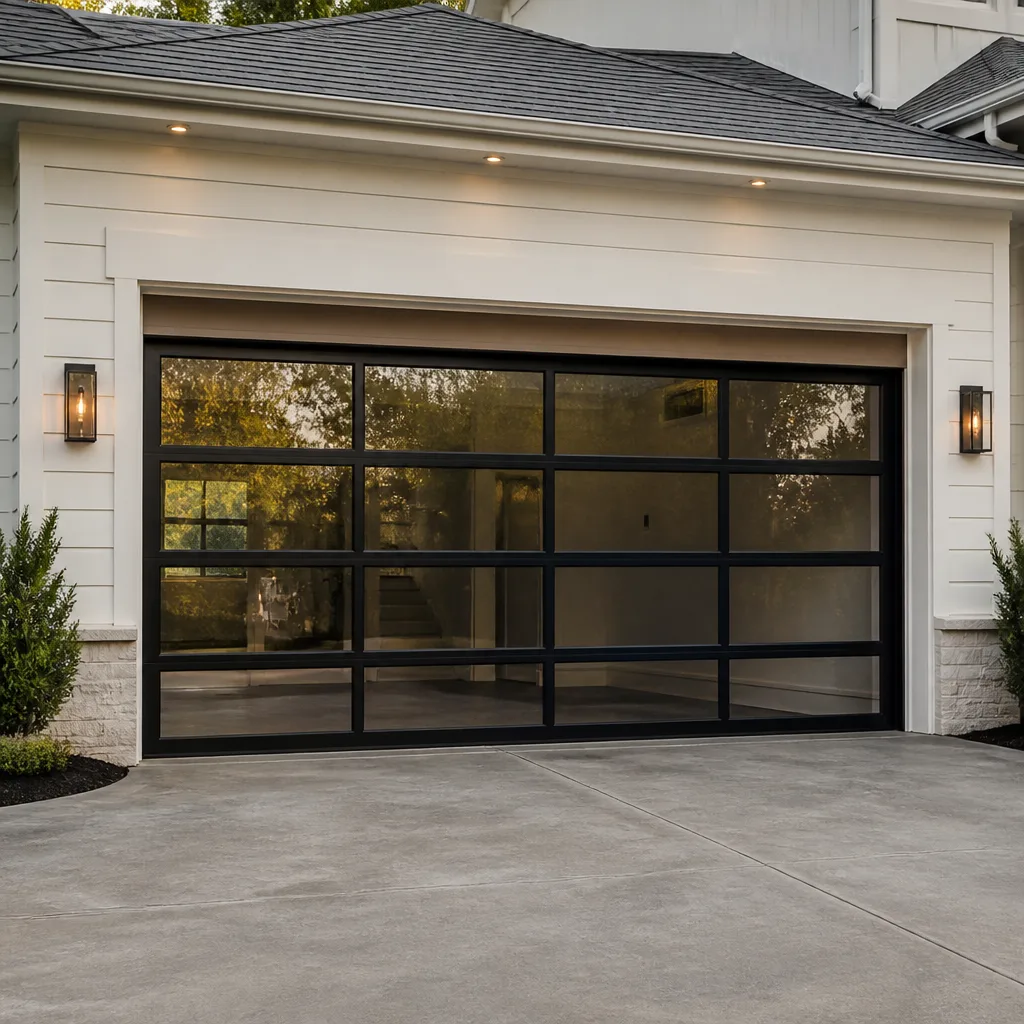 Full-view glass
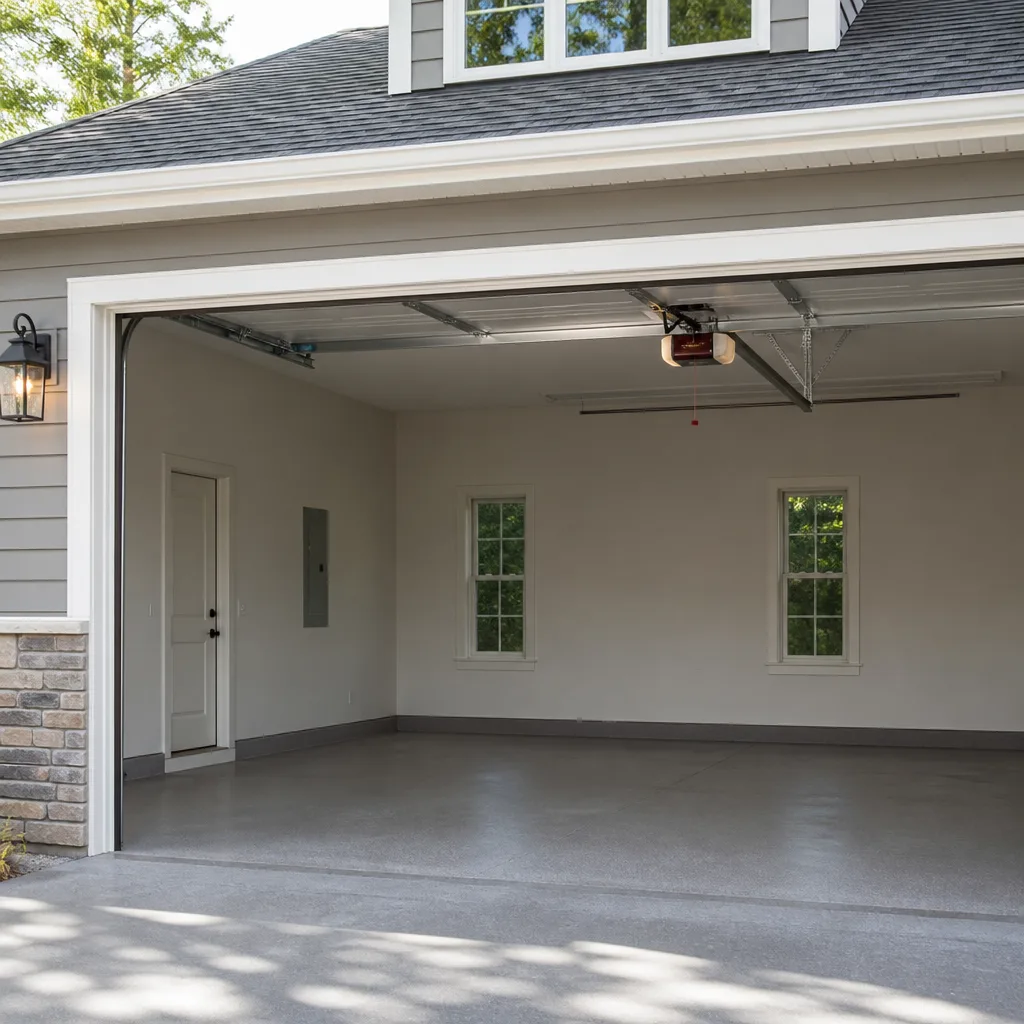 LiftMaster openers
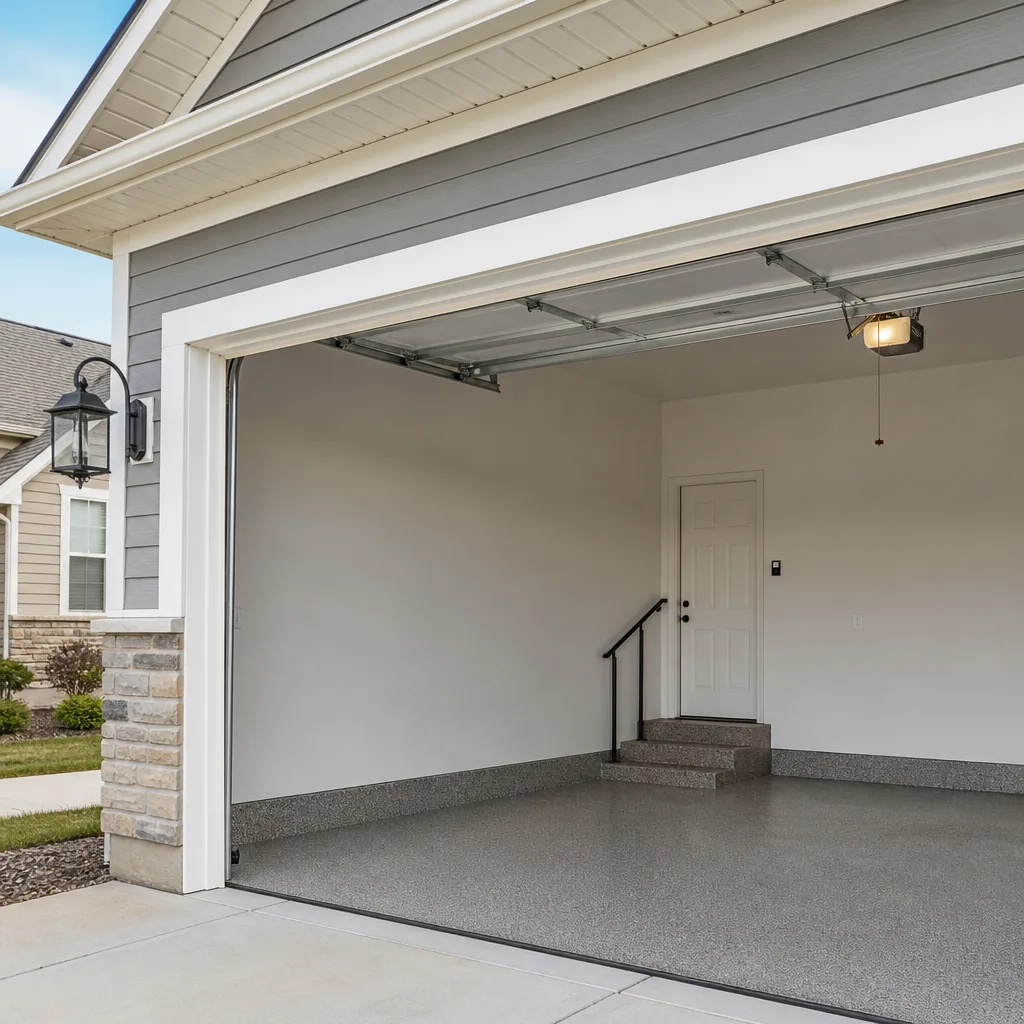 Chamberlain openers
Full 25-point door and opener safety check with every visit - springs, cables, rollers, tracks, and your LiftMaster or Chamberlain opener included
You get a price before we start. It does not change when the truck arrives.
Get your free estimateThe Complete Guide to Garage Doors in Bellflower
Most garage door guides are written for places with real winters. Snow load, freeze-thaw cycles, ice dams. Bellflower doesn’t have any of that, and yet a surprising number of local homeowners end up with doors spec’d for Chicago weather, then wonder why the panels warp and the opener strains within three years. The mistake has nothing to do with the door itself and everything to do with the environment it was chosen for. In this guide we’ll walk through how Bellflower’s coastal-adjacent heat, morning marine layer, and stucco-heavy housing stock change every decision, from spring tension to panel material to opener torque settings.
Styles & brands we work with
- Raised-panel steel
- Carriage house
- Modern flush
- Full-view glass
- LiftMaster openers
- Chamberlain openers
Quick Answer
A garage door in Bellflower needs to be selected and maintained around three local realities: temperature swings between cool marine mornings and 95°F afternoons, persistent airborne salt particulate, and attached garages built into stucco homes. The right door is a multi-brand decision based on exposure, opener compatibility, and your home’s resale context, and it almost always costs less to maintain when the opener and door are serviced together by someone who knows both systems. Garage door repair in this climate is more about tension and torque adjustments than anything else.
Table of Contents
- How Bellflower’s Climate Changes Garage Door Priorities
- The Marine Layer and Salt Particulate: What It Does to Hardware
- Why Stucco and Attached Garages Need Different Framing Checks
- Spring Tension and Opener Torque: The SoCal Difference
- Steel, Aluminum, or Composite: Which Panel Survives Coastal-Adjacent Air
- Brand Availability in the Bellflower, Lakewood, and Long Beach Corridor
- Repair vs. Replace: A Decision Flowchart for Bellflower Homes
- Common Mistakes to Avoid
- When to Call a Professional
- Frequently Asked Questions
- The Bottom Line
How Bellflower’s Climate Changes Garage Door Priorities
Bellflower sits a few miles inland from the Pacific, which means it gets the marine layer in the morning and real heat by early afternoon. That swing matters more than most people think. A garage door that starts the day at 58°F in damp air and finishes it at 92°F in dry sun is expanding and contracting every single day, and not by an insignificant amount. Metal tracks shift. Springs lose a fraction of tension. The opener’s torque settings that worked in March feel different in August.
We’ve worked on doors throughout Bellflower and the surrounding corridor, and the pattern is consistent: doors here fail differently than doors in the Inland Empire or the desert. Inland extremes are about dry heat. Here it’s the combination of moisture, salt, and repeated thermal cycles that wears hardware. The practical takeaway is that a maintenance schedule written for a generic “Southern California” home often misses the specifics of this microclimate. A door near the 91 freeway corridor gets more airborne particulate than one on a quiet residential street, and that shows up in roller wear and track buildup.
What this means for homeowners is straightforward. Choose materials and finishes that tolerate daily dimensional change. Keep tracks clean of the fine grit that accumulates in marine-adjacent air. And if your door feels sluggish in the afternoon but fine in the morning, the issue isn’t your imagination. It’s torque drift, and it’s one of the most common service calls we see.
The Marine Layer and Salt Particulate: What It Does to Hardware
The morning marine layer in Bellflower isn’t just fog. It carries fine salt particulate suspended in moisture, and that air settles into every exposed metal surface on a garage door. Hinges, rollers, springs, and track brackets all sit in that micro-film of salt water for hours each morning, then bake dry in the afternoon sun. Over time, that cycle creates corrosion that looks different from what you’d see in a purely humid or purely arid climate. It’s a dull, pitted oxidation on zinc-coated hardware, and it accelerates wear on nylon rollers and bearing plates.
This is why generic advice to “lubricate your garage door twice a year” falls short here. The correct move is to use a lubricant that resists salt-catalyzed corrosion and to be consistent about it. White lithium grease on the chain or screw drive. A silicone-based spray on rollers and hinges. Wiping down exposed hardware after a stretch of heavy morning fog helps more than most people expect. If you see rust blooming on a spring or bracket, that’s a signal the protective coating is compromised and the component is on a shorter lifespan than it should be.
For panel selection, this environment pushes toward materials with either a factory-baked enamel finish or a composite construction that doesn’t rely on exposed fasteners. More on that in the materials section below. The key point is that coastal-adjacent air in Bellflower is not the same as beachfront salt spray, but it’s also not benign. It’s a slow, cumulative exposure that shows up first on hardware, then on panel edges.
Why Stucco and Attached Garages Need Different Framing Checks
A large share of Bellflower’s housing stock dates from the post-war building boom, which means stucco exteriors and attached garages. Stucco is great for Southern California aesthetics, but it complicates garage door installation in ways that vinyl siding or wood frame homes don’t face. The header above the door opening is embedded behind stucco, and the condition of that structural beam isn’t visible from the outside. Cracks in the stucco above the door, a door that binds on one side, or a header that sags by even a quarter inch all point to the same possibility: the framing behind the stucco has shifted or deteriorated.
Before any new door goes in, someone has to verify that the opening is square, the header is sound, and the spring pad has enough clearance for the hardware that’s being specified. This isn’t optional. A new door installed into a compromised opening will never balance correctly, and the opener will fight it every cycle until something fails prematurely. We check header clearance and framing on every installation we quote, because the cost of discovering a bad header after the door is hung is always higher than finding it before.
Attached garages also mean the door shares a wall with living space. That changes the expectations for sound transmission. A hollow steel door on an attached garage will telegraph every opener cycle into the adjacent room. Doors with a polyurethane or polystyrene core dampen that vibration noticeably, and in Bellflower’s older homes where the garage shares a wall with a bedroom or den, that difference is worth the upgrade.
Spring Tension and Opener Torque: The SoCal Difference
Here’s the thing most guides get wrong about Southern California garage doors. In cold climates, spring tension is set to compensate for cold-weather contraction and heavier panels. In Bellflower, the challenge is the opposite. The daily temperature range means a spring that’s correctly tensioned at 7am is under slightly different load at 3pm. The difference is small, but over hundreds of cycles it contributes to uneven wear and can cause the opener to work harder than it should.
What we do differently for doors in Bellflower is set spring tension with an eye toward the upper end of the daily temperature range, not the midpoint. This keeps the door balanced at its warmest, which is when the metal has expanded and the panels are at their lightest. The same logic applies to opener torque settings. An opener that’s calibrated for a cool morning will strain in the afternoon heat, and that strain shows up as circuit board failures and stripped gears over time.
There’s a safety dimension here too. Torsion springs are under tremendous tension, and the high-tension cables that run alongside the door carry dangerous energy. If a cable frays or a spring shows a gap in its coil, the door is unsafe to operate. This is not a repair to attempt without training. The forces involved can cause serious injury, and the diagnosis of what’s actually wrong, spring versus cable versus opener limit setting, requires a trained eye. We recommend calling a professional for any spring or cable issue, every time.
Steel, Aluminum, or Composite: Which Panel Survives Coastal-Adjacent Air
The panel material decision in Bellflower comes down to three realistic options, and each has a different failure mode in this climate.
- Steel panels with a factory enamel finish: The most common choice and the best value for most Bellflower homes. The key is the quality of the finish. Cheap steel doors with a thin, shop-applied coating will show edge rust within a few years in marine-adjacent air. A factory-baked enamel or a galvanized substrate holds up far longer. Steel also handles the daily expansion cycle well when properly installed with room for movement.
- Aluminum panels: Lighter than steel and naturally resistant to the salt-catalyzed corrosion we described earlier. The tradeoff is dent resistance. Aluminum panels dent more easily than steel, and in attached garages that see active use, that’s a real consideration. Aluminum is a strong pick for a home where the garage is used for storage and the door sees less traffic.
- Composite panels: Wood-look composites are gaining ground in Bellflower because they offer the appearance of wood without the maintenance burden. They’re dimensionally stable, which matters in a climate with daily thermal swings, and they resist salt particulate well. The cost is higher than steel, and not every composite panel is rated for direct afternoon sun exposure the way Bellflower’s west-facing doors experience it. Ask about UV-stable finishes if you’re considering composite.
The real answer is that panel material should follow exposure. A south-facing door that bakes in afternoon sun needs a different finish than a north-facing door that sits in shade and morning fog. A door on a street with heavy traffic counts as a high-particulate location. We talk through these specifics on every estimate because a door chosen for the wrong exposure is the most common reason panels need early replacement.
Brand Availability in the Bellflower, Lakewood, and Long Beach Corridor
Bellflower sits in a dense service corridor. Lakewood is minutes to the east, Long Beach to the south, and the parts supply chain for garage door equipment in this stretch of Los Angeles County is mature. That’s good news for homeowners, because it means parts for the major brands are generally available without the long lead times that plague more remote service areas.
In practical terms, that affects the repair-versus-replace conversation and the speed of a fix. A broken garage door opener repair on a Genie unit, for example, doesn’t have to mean waiting days for a circuit board from a distant warehouse. The same goes for Clopay and Amarr door panels, which are common in the corridor. Wayne Dalton parts are similarly accessible. This is one of the quiet advantages of living in a dense urban corridor: brand-specific knowledge and parts density both run high.
That said, not every technician carries parts for every brand. The honest reality is that some crews specialize in one or two manufacturers and will try to adapt whatever they have to whatever you own. Colonial Garage Door Repair works differently. We’re factory-familiar with eight major brands, including Genie, Clopay, Amarr, and Wayne Dalton, so the diagnosis is specific and the parts arrive right the first time. No guesswork, no wrong parts, no return trip.
Repair vs. Replace: A Decision Flowchart for Bellflower Homes
This is the question every homeowner eventually faces, and the answer in Bellflower is shaped by a few local factors that generic guides miss. Walk through these steps in order.
- How old is the door? If the door is over 15 years old and showing panel edge rust, warped sections, or failing stiles, replacement is usually the better math. Repairs on an aging door tend to cascade, and each one good money after bad. If the door is under 10 years old, repair the specific fault.
- Is the opener compatible with a new door, or would you be locked into an old drive system? Some older openers can’t handle the weight of a modern insulated steel door without a torque adjustment that shortens their life. If the opener is original to the house, budget for a replacement when you’re doing the door.
- Is the failure structural or mechanical? A broken spring, a failed opener gear, or a frayed cable is a mechanical repair. A door that’s binding because the opening is out of square, or panels that are delaminating, points to structural issues that repair won’t fix for long.
- What’s the Bellflower resale context? In this market, an attached garage with a working, quiet, properly balanced door is a selling point. A door that looks tired and operates loudly is a negotiating chip for buyers. If you’re within a few years of selling, replacement often pays for itself in sale velocity.
- What does the written estimate say? When the repair quote is more than half the cost of a comparable new door, replacement is usually the better call. But this decision should be made with a full picture of the door’s age, condition, and opener compatibility, not on price alone.
The takeaway: in Bellflower, the repair-versus-replace call is usually about age and opener compatibility more than it is about the cost of any single part. We give homeowners the full picture on every estimate, with a written price agreed before any work starts.
Common Mistakes to Avoid
- Buying a door spec’d for cold climates. A door with a heavy insulation package designed for Minnesota winters is not a problem in Bellflower, but a door spec’d for freeze-thaw cycles and snow load often brings unnecessary weight and the wrong spring package. Match the door to this climate, not a generic national standard.
- Lubricating the wrong parts or using the wrong product. Spraying lubricant on the track rails is a classic error. It collects the fine grit from marine-layer air and turns into an abrasive paste. Lubricate hinges, rollers, and the drive system, not the track.
- Ignoring morning fog corrosion on hardware. The dull pitting on zinc-coated hinges and brackets isn’t cosmetic. It’s a sign that the protective layer is failing, and the hardware is on a shortened lifespan. Address it before it becomes a snapped cable or seized roller.
- Adjusting spring tension yourself. Torsion springs store enough energy to cause serious injury. Even with the right tools, the diagnosis of how much tension is correct requires understanding the door’s weight, the daily temperature range, and the opener’s torque settings. This is a professional repair, no exceptions.
- Replacing the opener without checking the door balance. A new opener on an unbalanced door will wear out prematurely and never operate quietly. Balance the door first, then set the opener. Doing it in the reverse order creates a second failure down the line.
- Overlooking stucco cracks above the door opening. A crack running diagonally from the corner of the door opening can signal a settling header behind the stucco. It’s easy to ignore and expensive to fix after a new door goes in and the binding starts.
- Mixing brands between door and opener without checking compatibility. Most modern openers work with most doors, but not all combinations are ideal. The opener’s torque settings, the door’s weight, and the drive system all need to match. A technician who knows your specific brand can confirm this in one visit.
When to Call a Professional
Some garage door issues are routine maintenance. Greasing a hinge, tightening a loose bolt, replacing a remote battery. Those are fine to handle yourself. But the line between routine and dangerous is crossed faster than most homeowners realize. A garage door weighs between 150 and 400 pounds depending on the material and insulation, and the springs that counterbalance that weight are under enough tension to break bones. If you see a gap in a torsion spring, a frayed cable, a door that hangs crooked, or an opener that struggles and reverses on its own, stop using the door and call someone who does this for a living. The same applies to any electrical issue inside the opener unit. Colonial Garage Door Repair offers free estimates in Bellflower, call (833) 598-2561. We answer 24/7. Fast dispatch from 7am to 7pm, Sunday through Friday.
Frequently Asked Questions
A basic single steel door with installation typically runs from $800 to $1,500 in Bellflower, while a double door with insulation and a factory finish can range from $1,500 to $3,500 or more. The final price depends on panel material, insulation, window inserts if any, and the condition of the existing framing and hardware. Call (833) 598-2561 for a written estimate, free of charge, with the price agreed before any work begins.
Yes, spring replacement is a same-day repair in most cases, and Colonial Garage Door Repair carries springs for the major brands common in the Bellflower corridor. A torsion spring is replaced as a matched pair when both sides have the same cycle count, and the cost is quoted and approved before any work starts. Call (833) 598-2561 and we’ll send a technician from 7am to 7pm, Sunday through Friday.
That’s a torque drift issue caused by the daily temperature swing in Bellflower, and it’s a common one. The metal components expand in afternoon heat, the door’s weight distribution shifts slightly, and an opener calibrated for a cool morning has to work harder. The fix is a torque and limit adjustment specific to your opener brand and door weight. Call (833) 598-2561 and we’ll set it correctly.
In most cases, a 20-year-old door is a replacement candidate. The panels are nearing the end of their service life, the hardware has been through thousands of thermal cycles, and repairs tend to cascade. If the opener is also original, budget for replacing both at the same time. We’ll give you the full picture on a free estimate, with no pressure either way.
Colonial Garage Door Repair is factory-familiar with eight major brands, including LiftMaster, Chamberlain, Genie, Clopay, Amarr, Wayne Dalton, Craftsman, and Raynor. We service both the door and the opener in a single visit, which means the diagnosis covers the whole system, not just one component. Your door, your opener, one call.
The price is set by the written estimate, which we provide after inspecting the door, opener, and framing. You approve the number before any work starts, and that’s the number you pay. No surprises, no add-on charges discovered halfway through the job.
The Bottom Line
Bellflower is its own environment, and garage doors here live and die by how well they handle marine-layer salt, daily thermal swings, and attached-garage architecture. The right door is the one chosen for your specific exposure, paired with an opener calibrated for this climate, and serviced by someone who knows your brand without guessing. That’s the difference between a door that lasts fifteen years and one that fights you every summer afternoon. If you’re dealing with a door that’s noisy, unbalanced, or failing outright, start with a free estimate. Call (833) 598-2561. We answer 24/7, and we’ll bring the diagnosis to you.
Written by the team at Colonial Garage Door Repair, serving Bellflower since 2013.
See the difference
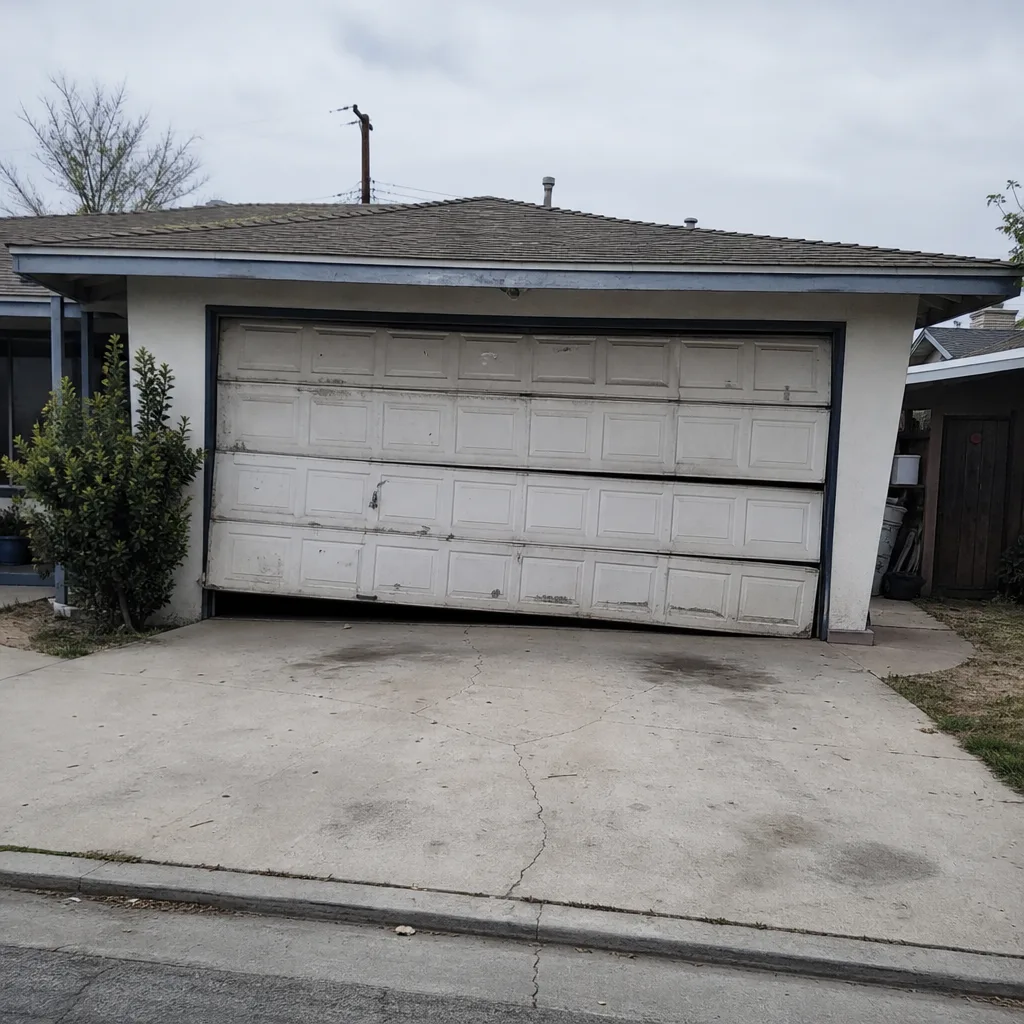 Before
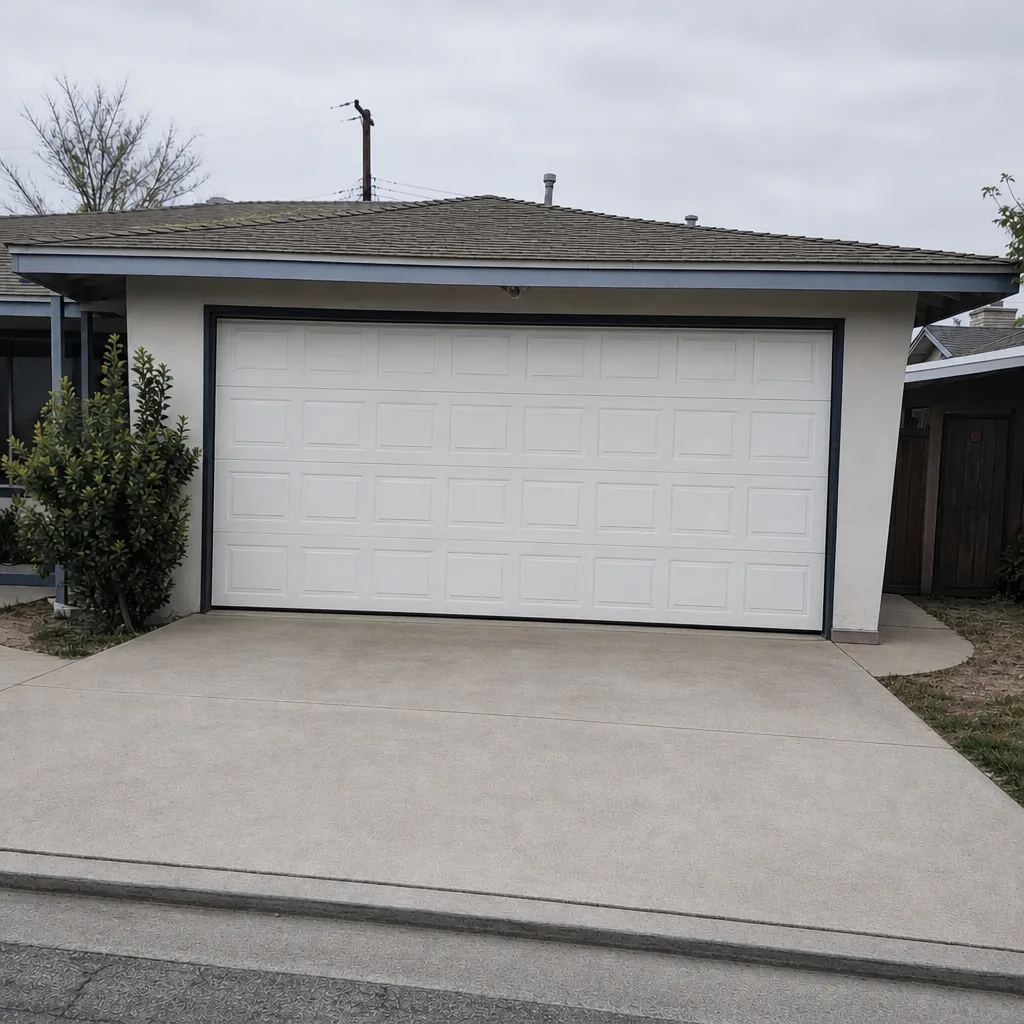 After
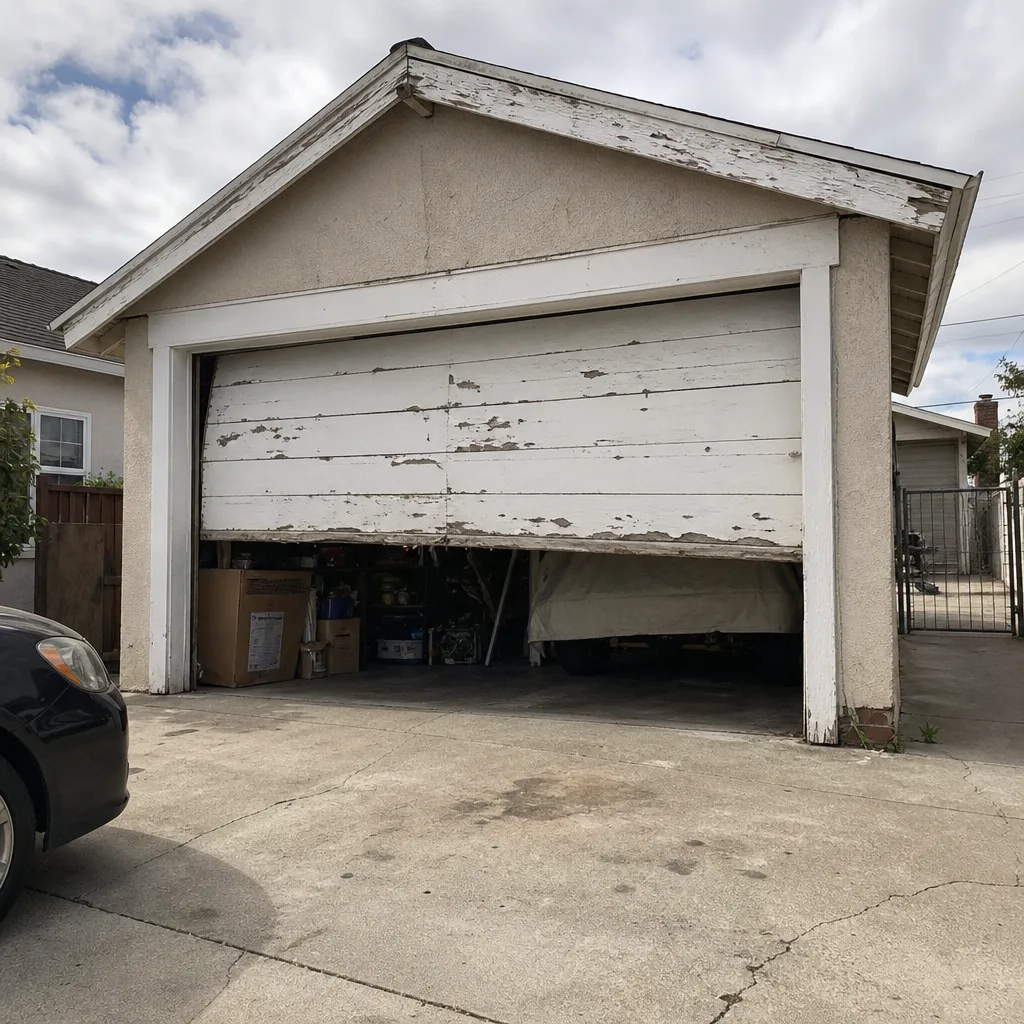 Before
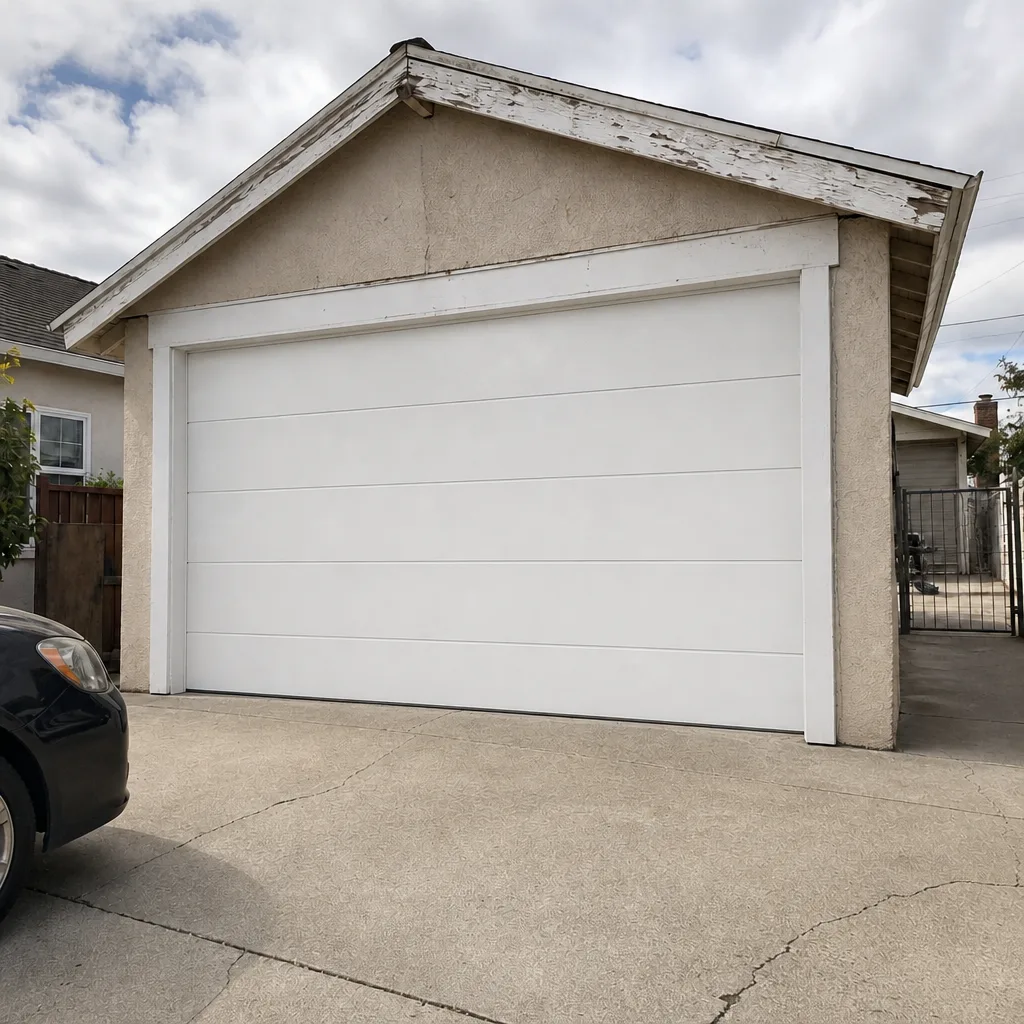 After
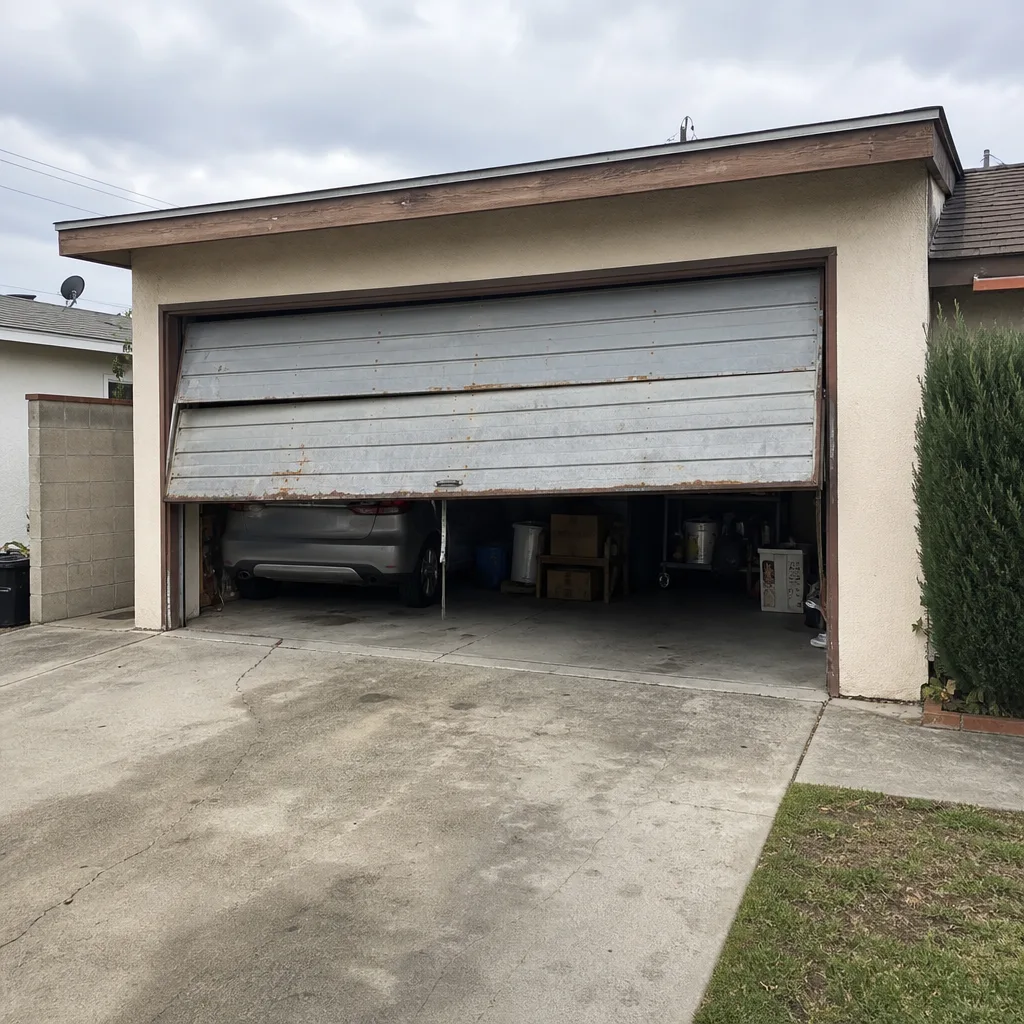 Before
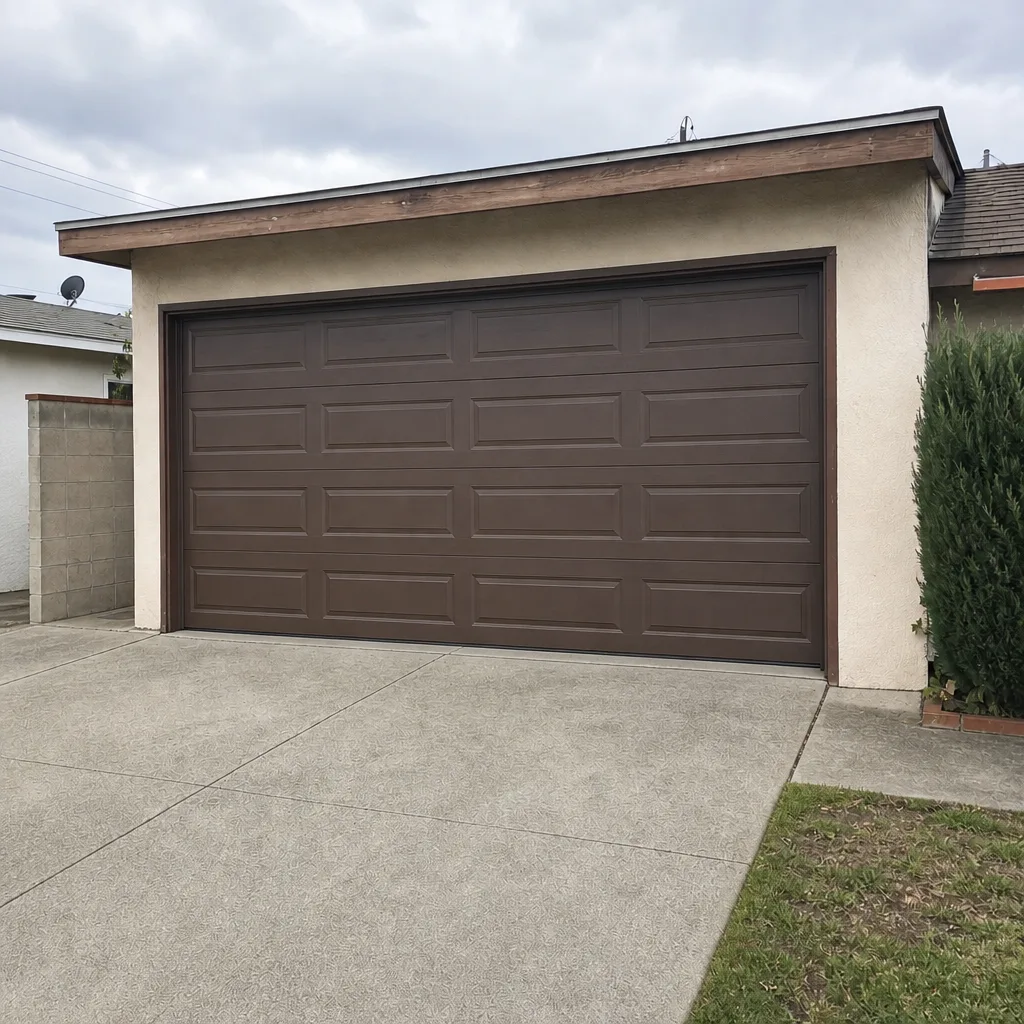 After